Leave Your Message

Title*

First Name*

Last Name*

Phone*

country*

Message*

Customized Request

10 Tips to Choose the Best Cotton Tie Supplier?

Choosing the right Cotton Tie supplier requires more than comparing prices on a product page. The fabric may appear smooth in photographs, yet feel thin under real inspection. A reliable supplier should explain the cotton composition, weave, weight, dyeing process, and stitching method clearly. Request physical samples before placing a large order. Check whether the tie keeps its shape after repeated folding. Small details matter, including clean edges, secure seams, accurate colors, and consistent lining.

This guide presents ten practical tips for evaluating Cotton Tie suppliers with greater confidence. It considers production experience, sample quality, minimum order quantities, lead times, customization options, packaging, and communication. Ask for test reports or recognized certifications when they are relevant to your market. Verify factory information instead of trusting polished claims alone. A supplier who answers difficult questions deserves more attention than one who only promises low prices.

No supplier is perfect. A beautiful sample can hide weak bulk production. A fast reply cannot replace dependable quality control. It is also easy to focus on cost and overlook delayed delivery, color variation, or poor after-sales support. Keep written specifications, approve a final sample, and discuss inspection procedures before production begins. Careful comparison takes time, but it reduces avoidable surprises. The best partnership usually comes from transparent communication, realistic expectations, and evidence gathered at every stage.
10 Tips to Choose the Best Cotton Tie Supplier?

Define Your Cotton Tie Requirements and Quality Standards

Before comparing suppliers, define what your cotton ties must do in daily use. Specify the fabric composition, weave, weight, width, length, lining, interlining, and preferred finish. A lightweight cotton tie may suit summer uniforms, while a denser weave can hold its shape better. Record acceptable measurements, such as a two-centimetre width tolerance. Small differences become obvious across a large order.

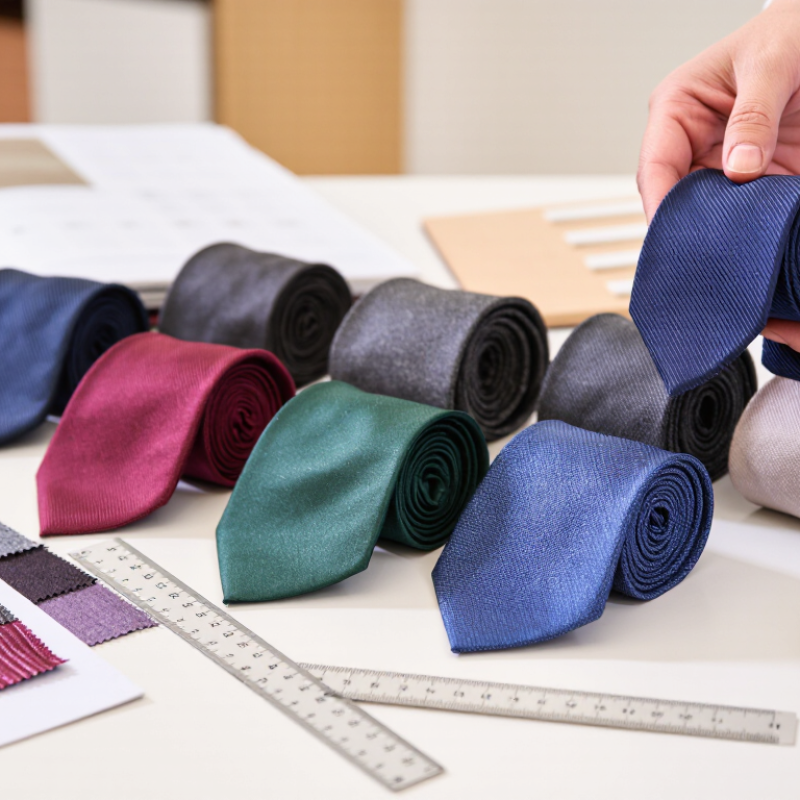
Quality standards should be measurable, not based on attractive photographs. Request pre-production samples and inspect the fabric under natural light. Check color consistency, loose threads, edge rolling, seam strength, and knot recovery after repeated use. Ask for colorfastness, shrinkage, and fiber-content test reports from a qualified laboratory. The tie should feel balanced, not stiff or hollow. It should also maintain a clean blade and symmetrical tip after handling.

I once approved a sample because its surface looked excellent. After washing, the lining shifted slightly. That mistake changed my inspection process. Now, I test samples under realistic conditions, including tying, unpacking, and gentle cleaning. Discuss production tolerances, inspection stages, packaging, and corrective actions in writing. Some suppliers may promise perfection too easily. That deserves careful questioning. A reliable supplier explains limitations clearly and supports claims with records, repeatable tests, and consistent samples.

Verify Supplier Experience, Certifications, and Production Capacity

A reliable cotton tie supplier should show experience, not merely claim it. Ask for factory records, past production types, monthly output, and recent delivery data. The Textile Exchange Materials Market Report 2024 estimates global fiber production reached 124 million tonnes in 2023. This scale makes traceability and process control essential, especially for small accessories with strict color and shape requirements.

Request current certificates and verify their scope, issuing body, expiry date, and covered facility. ISO 9001 is useful because the ISO Survey 2023 recorded more than one million certificates worldwide, but certification alone cannot prove consistent tie quality. Review inspection reports, fabric test results, and corrective-action records. Check whether the certificate covers the actual cutting and sewing site. It may not.

Capacity needs physical evidence. Ask for machine lists, worker shifts, monthly cotton consumption, and production samples from busy periods. Compare promised lead times with purchase orders from the previous six months. A supplier producing 50,000 ties monthly may still fail a 10,000-piece order during peak season. Request a pilot order and measure stitching density, interlining recovery, color fastness, and packaging accuracy. Visit the facility when possible. Photos can mislead. My own caution is simple: I once treated a polished audit file as enough evidence, and overlooked delayed sample revisions. Supplier evaluation should include communication speed, record accuracy, and what happens when production goes wrong.

Compare Cotton Materials, Designs, Customization, and Sampling Options

Choosing the best cotton tie supplier starts with the material, not the catalog image. Textile Exchange’s 2024 Materials Market Report recorded 124 million tonnes of global fiber production in 2023, with cotton remaining a major natural fiber. Ask for fiber composition, yarn count, fabric weight, and finishing details. A supplier should explain whether the cotton is combed, mercerized, blended, or recycled. Request test results for colorfastness, shrinkage, pilling, and seam strength. Cotton can feel excellent yet wrinkle too easily.

Design checks should be practical. Compare twill, jacquard, knitted, and printed constructions under daylight. Inspect the tie’s blade symmetry, tipping, lining, keeper loop, and bar tack. A small design error becomes obvious around the neck. Customization should cover width, length, weave, logo placement, packaging, and color matching. Use recognized color references, but approve a physical fabric swatch. Digital screens mislead. AATCC Test Method 61 can help assess accelerated colorfastness, while ISO 105-C06 supports washing colorfastness evaluation.

Sampling reveals the supplier’s real working habits. Order a plain sample, a custom sample, and one sample after washing. Compare hand feel, shade, recovery, and stitching. Record every change. I once trusted a “final” sample without checking its lining; that was careless. Also ask about minimum order quantity, sample fees, revision limits, lead time, and production capacity. Textile Exchange projects global fiber production could reach 160 million tonnes by 2030, increasing pressure for traceable sourcing. Documentation matters. A supplier who answers slowly may still produce well, but vague material records deserve a second review.

Evaluate Pricing, Minimum Orders, Lead Times, and Payment Terms

When choosing a cotton tie supplier, compare the complete price, not only the quoted unit cost. Ask for separate charges for fabric, weaving, labeling, packaging, sampling, and freight. A low price can hide expensive setup fees. Request tiered pricing at 100, 500, and 1,000 pieces. Then calculate the real cost per finished tie.

Minimum order quantity deserves careful attention. A supplier requesting 2,000 pieces may not suit a small seasonal collection. Ask whether colors have separate minimums. Confirm if mixed patterns can share one order. I once underestimated this detail and paid for unused fabric. That mistake was avoidable. Review sample costs, approval charges, and any fees for changing dimensions.

Lead times should be written clearly. Confirm the sample period, production window, inspection date, and shipping estimate. Add extra days for fabric shortages or holiday closures. A reliable supplier gives realistic updates, not optimistic promises. Payment terms also reveal business maturity. Compare deposits, balance timing, accepted currencies, bank charges, and protection for defective goods. A 30 percent deposit may sound reasonable, but the balance should follow an approved inspection. Request written terms and recent trade references. Small details matter.

Review Communication, Quality Control, Shipping, and After-Sales Support

10 Tips to Choose the Best Cotton Tie Supplier?

Communication should be tested before any purchase order. Ask for one named contact, response times, and written answers. Keep it written. Confirm fabric composition, yarn count, weave density, color standards, and acceptable defects. Textile Exchange’s Materials Market Report 2024 estimates global fiber production reached 124 million tonnes in 2023. Cotton represented about 19 percent of that volume. This scale makes traceability important. Request batch records and fiber-content documentation, not vague assurances.

Quality control needs physical evidence. Review pre-production samples, stitching, lining attachment, colorfastness, shrinkage, and seam strength. Ask whether inspections occur during production and before dispatch. An independent laboratory can verify disputed results. A polished sample can still hide inconsistent production. I have seen suppliers control appearance well but overlook measurement tolerances. That mistake becomes expensive with larger orders.

Shipping promises should include production days, packing dates, carton dimensions, transport terms, and delay procedures. The World Bank’s 2023 Logistics Performance Index gathered responses from 4,090 logistics professionals across 139 economies. It assesses customs, tracking, infrastructure, and delivery timeliness. Use those categories when comparing a supplier’s logistics plan. Track every carton. After-sales support also needs measurable rules. Set deadlines for claims, photo evidence, replacement goods, credits, and escalation. Test this process with a small issue before approving volume production. Silence after payment is a warning sign. Suppliers should still provide updates when the answer is inconvenient.